
3.2 Monoclonal antibodies
3.2.1 Producing Monoclonal antibodies
FSL: GCSE Biology Revision "Monoclonal antibodies"
- Antigens trigger an immune response in the body (found on cells/pathogens).
- The antibody is made by a white blood cells, made by lymphocytes.
- Monoclonal antibodies are proteins that are produced to target a specific cell
or chemical in the body.
- They are made by identical immune cells,
these identical immune cells are clones of the parent cell.
- Monoclonal antibodies are produced from a single clone of cells. The
antibodies are specific to one binding site on one protein antigen and so
are able to target a specific chemical or specific cells in the body.
How they are made:
- A mouse is vaccinated to start the formation of antibodies.
- Lymphocytes are extracted from the spleen.
- The lymphocytes are fused with a particular kind of tumour cell (myeloma) to make a cell called a hybridoma cell.
- The hybridoma cell can both divide and make the antibody.
- Single hybridoma cells are cloned in the laboratory to produce many identical cells that all produce the same antibody.
- A large amount of the antibody can be collected and purified.
3.2.2 Uses of monoclonal antibodies
FSL: GCSE Biology Revision "Uses of monoclonal antibodies"
- Monoclonal antibodies are made to detect a particular antigen or chemical.
- For example:
- Detecting pregnancy (identifying the hormone hCG).
- Drug testing in sport (cocaine, anabolic steroids).
- Cancer treatment (only binding and attacking cancer cells, not healthy ones).
- In laboratories to measure the levels of hormones and other chemicals in blood, or to detect pathogen.
- In research to locate or identify specific molecules in a cell or tissue by binding to them with a fluorescent dye.
- To treat some diseases: for cancer the monoclonal antibody can be bound to a radioactive substance, a toxic drug or a chemical which stops cells growing and dividing. It delivers the substance to the cancer cells without harming other cells in the body. Monoclonal antibodies can also block growth chemicals from binding, which prevents the cancer dividing.
- Covid tests!
Pregnancy Tests
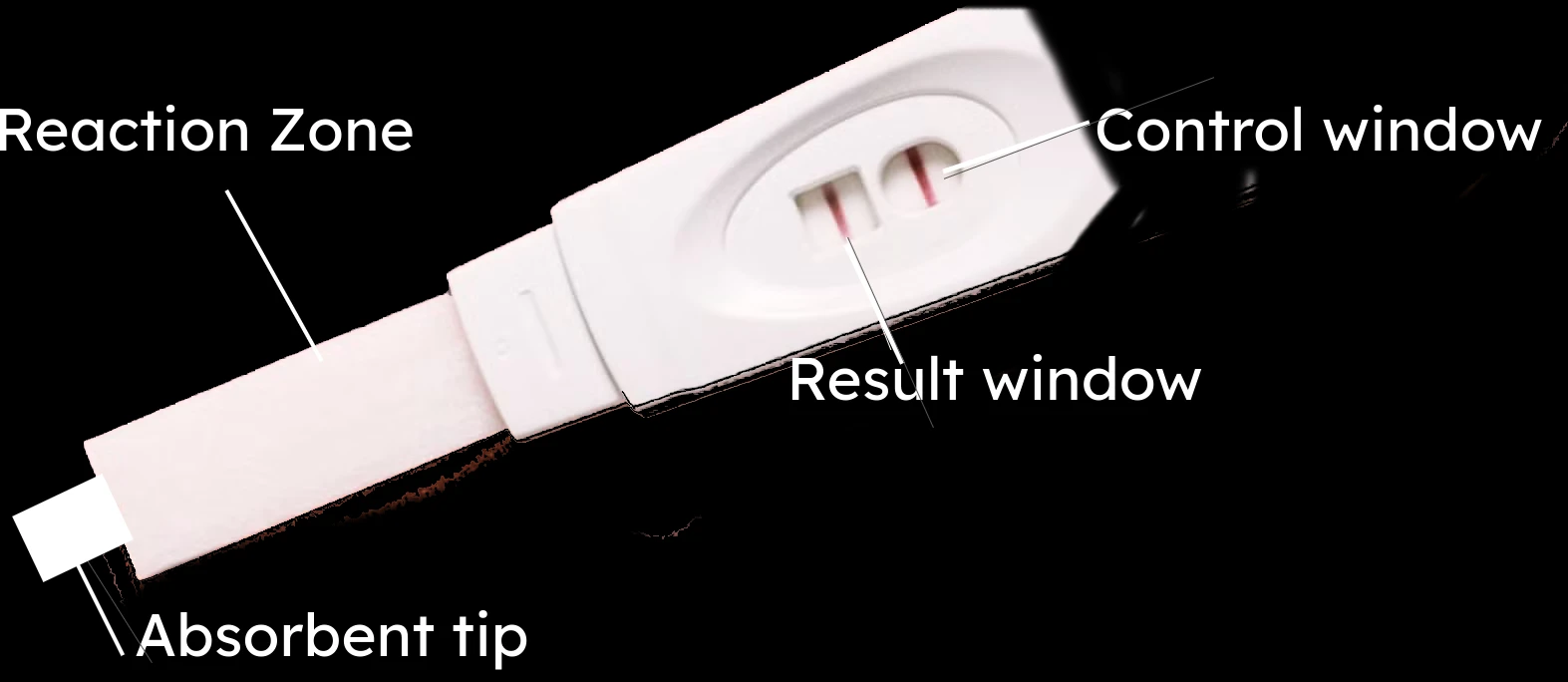 this image took me half an hour to make help
How a pregnancy test works:
- Urine is applied to the absorbent strip.
- (if pregnant) hCG hormone binds to the mobile antibody in the reaction zone.
- Each mobile antibody has a blue dye attatched.
- Mobile antibodies with the hCG hormone attached binds to the immobilised antibodies in the test window.
- Excess mobile antibodies without hCG attactched bind to immobilised antibodies at the control window.
- The accumulation of blue dye in either window creates a line to indicate whether the test is positive or negative.
Advantages and disadvantages for using monoclonal antibodies
| Advantages | Disadvantages |
|---|---|
| Can be used to treat a range of diseases because it is specific. | Expensive to develop. |
| Healthy cells are not effected, unlike chemo. | More side effects than expected. |
| They bind to specific antigens. | The mouse antibodies used can trigger an immune response. |
| Side effects need treatment. | |
| Producing the correct monoclonal antibody and attaching the drug can be difficult. |